
The State of K-12 Student Attitudes and Perceptions of Engineering
NSF x ASEE x Merit Research Report
From Early Identity to Career Pathways
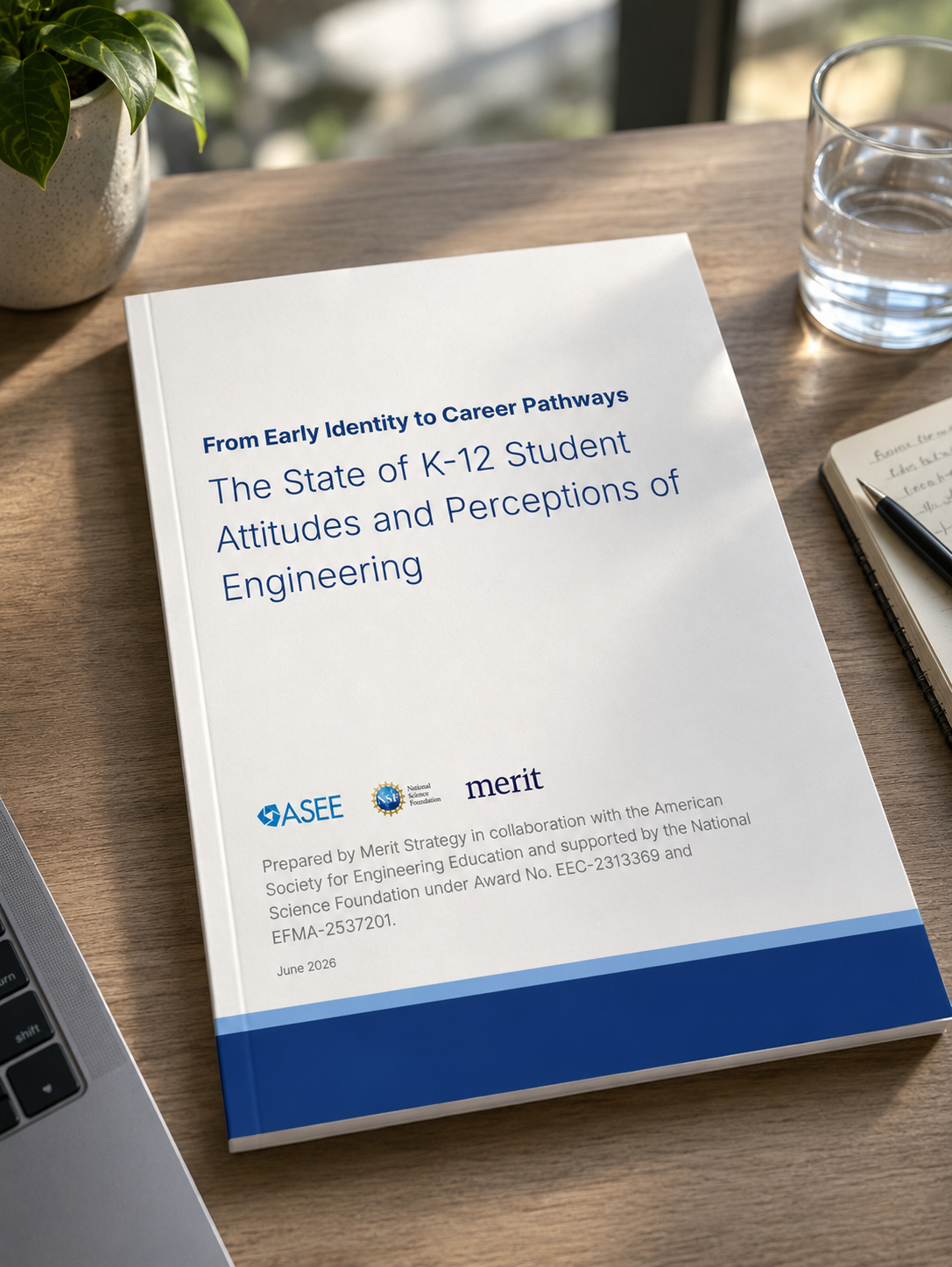
Full report, including findings, strategic framework, and appendices.
PDF · 126 pages · 10.8 MB
What’s inside
A human-centered look at how engineering identity develops across K-12 and into college
The four spheres of influence shaping students’ paths: parents and caregivers, teachers and schools, clubs and community, and media and culture
A developmental hierarchy spanning language, access, psychological safety, belonging, and agency
Inflection points and opt-out moments along the student lifecycle
Three strategic pillars for strengthening engagement: Visibility, Guidance, and Access
Thank you for your interest in this research about how young people come to see engineering as a path for them.
This report shares what we learned from a mixed-methods study of how U.S. students, from kindergarten through their first year of college, and the parents, teachers, and communities around them, understand and relate to engineering. We looked closely at what draws students in, what holds them back, and where the most meaningful moments for connection live along the way.
If you’d like to talk through the findings or explore what they might mean for your work, we’d welcome the conversation. You can reach us at hello@meritstrategy.com.
Prepared by Merit Strategy in collaboration with the American Society for Engineering Education, supported by the National Science Foundation under Award No. EEC-2313369 and EFMA-2537201.